
Affiliate disclosure: SolOffGrid may earn a commission from qualifying purchases made through links on this page, at no added cost to you. This is a research-based review of published information. We have not purchased, installed, opened, charged, discharged, or physically tested this battery.
The VEVOR LPS48100-B is a 51.2V, 100Ah LiFePO4 battery sold in a server-rack format. VEVOR lists 5,120Wh (5.12kWh) nominal energy, a 100A maximum charge/discharge current, CAN and RS485 communication, an LCD, and app monitoring. That makes it a product worth comparing for a 48V-class storage project—but the product page is not enough to establish that it fits your inverter, cabinet, local code requirements, or intended use.
Our conclusion: the published specification set looks competitive on paper, but buyers should verify the exact model revision, current inventory, product documents, rack dimensions, and BMS communication before choosing it. VEVOR explicitly says the LPS48100-B is not protocol-compatible with the earlier LPS-48100. Do not treat similarly named batteries as interchangeable.
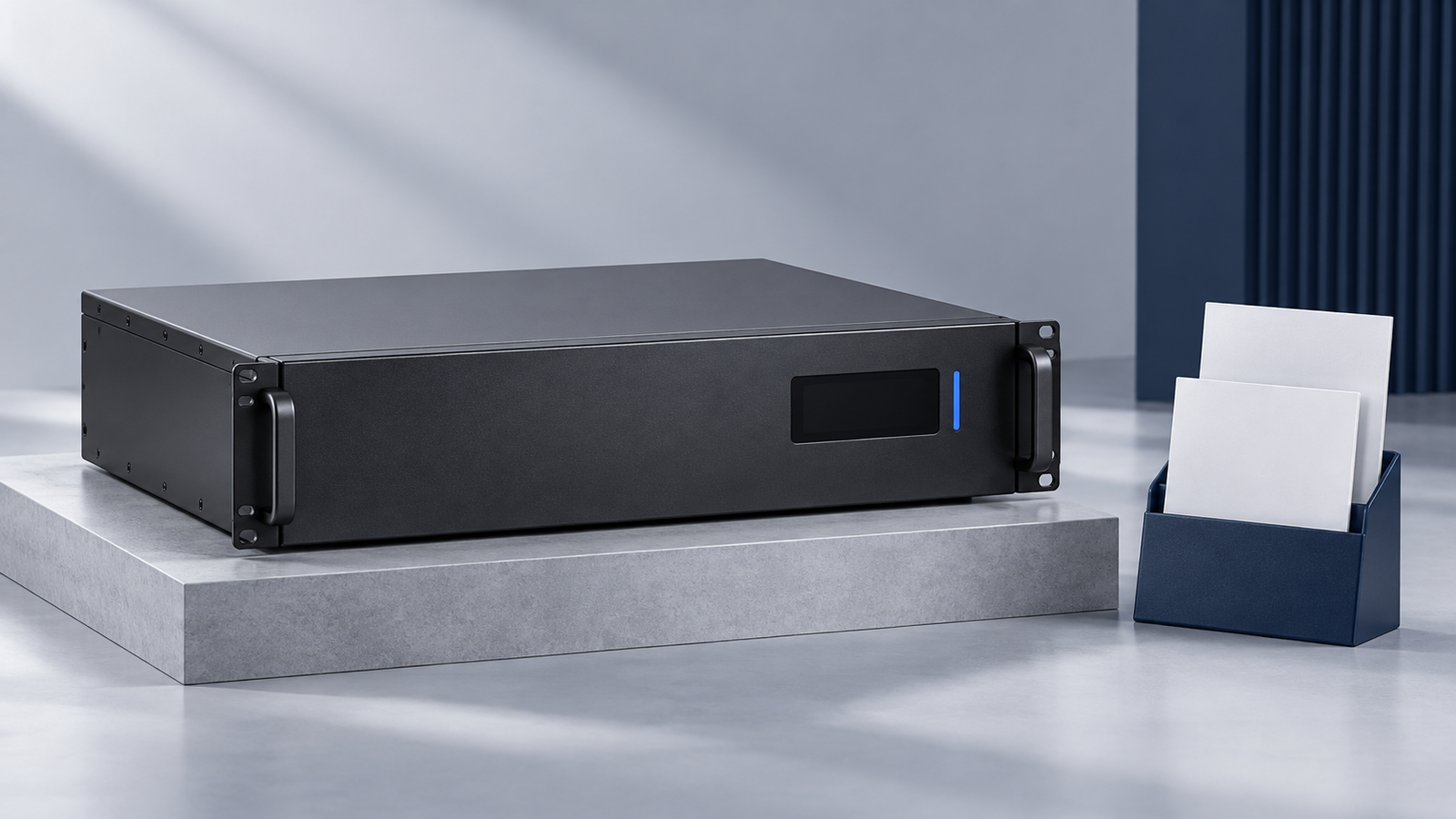
The model suffix matters.
- Identify the exact model
- Match the full LPS48100-B code on the product label and listing. Do not assume it is interchangeable with LPS-48100.
- Confirm BMS compatibility
- Verify inverter model, firmware, protocol and supported cable in current documentation.
- Review exact-model documents
- Check the current manual, dimensions, operating limits and warranty.
Editorial explanation, not a product photograph, performance test or installation design.
VEVOR LPS48100-B specifications at a glance
| Model | LPS48100-B |
|---|---|
| Chemistry | LiFePO4, according to the VEVOR listing |
| Nominal voltage | 51.2V DC; marketed for 48V-class systems |
| Capacity / nominal energy | 100Ah / 5,120Wh (5.12kWh) |
| Maximum charge/discharge current | 100A maximum, per the product listing; confirm continuous and peak definitions in the manual |
| Communications and display | RS485, CAN, LCD, and app monitoring listed |
| Cycle-life claim | More than 6,000 cycles, as advertised; conditions and end-of-life threshold must be checked |
| Availability | Inventory can differ by pack size and location. The single-unit listing may be out of stock while bundle listings show availability. |
What 5.12kWh means—and what it does not
The arithmetic is straightforward: 51.2 volts multiplied by 100 amp-hours equals 5,120 watt-hours. That is the battery’s stated nominal energy, not a guarantee that a home will receive 5.12kWh of usable AC electricity. Usable energy depends on permitted depth of discharge, inverter losses, reserve settings, temperature, battery condition, operating limits, and any manufacturer warranty rules.
Likewise, the 100A figure needs context. The product page labels it as a maximum charge/discharge current, but you should consult the latest manual to confirm whether that value is continuous, time-limited, or affected by temperature and state of charge. Do not use a marketing headline alone to size conductors, overcurrent protection, an inverter, or a battery bank. Those decisions belong to the approved system documentation and a qualified professional.
Features VEVOR lists
Server-rack style enclosure
VEVOR markets the LPS48100-B as a server rack battery and describes its design as compatible with standard server racks. Still, the word “standard” is not a substitute for dimensions. Before ordering, obtain the exact width, height or rack-unit count, depth, mass, mounting and support requirements, terminal clearance, and allowed orientation from the current manual or drawing. Confirm that your cabinet can safely support the combined weight of all batteries and that the manufacturer’s required clearances can be maintained. The cabinet or rails may not be included.
CAN and RS485 ports
Communication ports can let a battery share status with compatible equipment, but port names alone do not prove interoperability. The inverter and battery must use a supported protocol and settings, and may require a specific cable, pinout, firmware, or operating mode. Ask both manufacturers to confirm the exact battery model (including the “-B”), inverter model, firmware, and supported configuration in writing. If communication is not supported, the system may behave differently or require a documented alternative configuration; do not improvise settings.
LCD and app monitoring
The listing describes an LCD and mobile-app monitoring for information such as cell voltage, temperature, and capacity. Useful questions remain: which app is required, whether a network connection is needed, what data is retained, how firmware is updated, and whether support is available for your region. An app display is helpful for observation; it does not replace listed protective devices, approved controls, or periodic inspection.
Cycle-life claim
VEVOR advertises more than 6,000 cycles. Cycle-life numbers are meaningful only alongside test conditions: depth of discharge, charge/discharge rate, temperature, and the remaining-capacity threshold used to define end of life. Ask for the supporting document and compare its conditions with the warranty. A headline cycle number should not be translated into a precise service-life promise for a household system.
The model-revision warning matters
One unusually important detail appears in VEVOR’s product Q&A: the company says the newer LPS48100-B does not share BMS communication/protocol compatibility with the earlier LPS-48100. A retailer, marketplace, or old review may use similar naming while discussing a different revision. Check the model code printed on the product and the current listing—not just “VEVOR 48V 100Ah.” If you already own older units and plan to expand a bank, get a written compatibility answer from VEVOR before mixing models or protocols.
Availability, warranty, certification, and shipping checks
VEVOR’s one-battery listing and multi-battery bundles can show different inventory. Availability can also vary by ZIP code, warehouse, and date. Confirm the specific single-unit SKU, delivery region, shipping cost, return window, hazardous-goods handling, and whether the package includes the required communication cable or mounting hardware before checkout.
Do not rely on a short product-page statement to understand a warranty. Read the complete current warranty and look for registration deadlines, installation conditions, throughput or cycle limits, exclusions, proof-of-purchase rules, labor coverage, freight responsibility, and the process for a failed unit. If the page or Q&A mentions UL certification, request the actual certificate or listing record and verify that it applies to the exact LPS48100-B model and intended system. SolOffGrid has not independently audited VEVOR’s certification or warranty claims.
Potential advantages on paper
- Clear nominal capacity: 100Ah at 51.2V is a familiar 5.12kWh class for comparison.
- Multiple monitoring interfaces: the listing names CAN, RS485, an LCD, and app monitoring.
- Rack-oriented format: it may suit a planned cabinet when the dimensions and support requirements match.
- Published headline limits: the listing provides a current rating and cycle-life figure to investigate in the manual and warranty.
- Product-specific documentation path: VEVOR provides a product manual link; review the current manual for your exact revision before purchase.
Risks and open questions
- Compatibility is not universal: the “-B” revision has a different BMS protocol from the older LPS-48100 according to VEVOR’s own Q&A.
- Current limits need definition: verify continuous versus peak ratings and temperature derating in the manual.
- Rack-fit claims are broad: confirm actual measurements, support, ventilation, orientation, and included hardware.
- Cycle life is a claim, not a household guarantee: obtain test conditions and warranty terms.
- Stock may vary by pack: check the exact one-unit listing and delivery location instead of assuming a bundle’s availability applies.
- Certification scope needs evidence: request documentation tied to the exact model and intended use.
- No independent testing here: we did not measure capacity, performance, app reliability, thermal behavior, or cycle life.
Who should consider this battery?
The LPS48100-B may be worth shortlisting if you are comparing 100Ah, 51.2V LiFePO4 rack batteries, have an inverter whose manufacturer documents a compatible operating range and communication method, and have confirmed that a suitable cabinet can support the product. It may also interest buyers who value a built-in display and app monitoring and are comfortable verifying the supporting documents before purchase.
It is a poor fit for a buyer who needs a guaranteed same-day single-unit shipment without checking stock, expects the newer model to communicate with older LPS-48100 batteries, cannot verify rack dimensions, or wants an independently lab-tested recommendation. This page is a product-information comparison, not a system design or installation guide.
How it compares with other 48V-class options
ECO-WORTHY’s Cubix100 is also listed as a 51.2V, 100Ah, 5.12kWh server-rack battery, but its current single-unit listing may be sold out; verify availability and documents on the official page. Renogy’s 48V 50Ah product is a 2.4kWh-class battery with a different capacity and form factor, so it is not a like-for-like 100Ah rack competitor. Jackery, Zendure, and BougeRV often focus on portable power stations and related products rather than this exact rack-battery format; compare the product category, system design, and warranty before mixing them in a shortlist.
For a broader side-by-side shortlist, see our best server rack battery comparison, the 48V solar battery guide, and our solar battery rack and cabinet guide. For an initial energy estimate, try the solar battery calculator; it is only a planning aid and not a substitute for a qualified system design.
Questions to ask before ordering
- Is the exact LPS48100-B single-unit SKU available and deliverable to my ZIP code?
- What are the current manual’s voltage range, continuous current limits, temperature limits, and protective behavior?
- Does the inverter maker support LPS48100-B and its exact CAN/RS485 protocol, firmware, and cable?
- Can I get the model’s dimensions, weight, required rack support, clearances, and mounting instructions?
- What do the cycle-life test conditions and full warranty actually cover?
- Can VEVOR supply current certification/listing documents tied to this exact model?
- Are shipping, return freight, and any required accessories included in the total delivered cost?
Frequently asked questions
Have you physically tested the VEVOR LPS48100-B?
No. This review evaluates published manufacturer information and buying questions, not measurements from a unit owned or tested by SolOffGrid. We have not purchased, installed, opened, charged, discharged or lab-tested this battery. The illustrations are editorial concepts and do not document physical testing.
Is LPS48100-B interchangeable with the older LPS-48100?
Do not assume interchangeability. VEVOR’s product Q&A says the B revision is not compatible with LPS-48100 in BMS communication and protocol. That answer concerns communications; it does not establish a safe mixed-bank configuration or compatibility with a particular inverter. Confirm the complete model and revision in current documentation before selecting or combining equipment.
Do CAN and RS485 ports prove inverter compatibility?
No. Port names are only part of the specification. Check the documented battery revision, inverter model, supported protocol, firmware, cable and configuration together. Request written manufacturer confirmation when the compatibility documents do not identify your exact combination. Do not improvise a communication setup from a matching connector alone.
Does the advertised cycle count guarantee a number of years in service?
No. A cycle claim needs its test conditions and end-of-life definition. Review the depth of discharge, charge/discharge rate, temperature and remaining-capacity threshold, and compare them with warranty conditions. This review does not independently verify cycle life or predict a precise household service life from the headline count.
Do I need to verify rack dimensions if the listing says server rack?
Yes. Obtain the current model drawing and mounting requirements, then compare dimensions, weight, supported orientation, cabinet support, accessories and service access. A general rack description is not confirmation that a specific cabinet or shelf is suitable. Check which parts are included in the exact package rather than assuming the rack or rails are supplied.
Do the LCD and app replace system design and protective equipment?
No. Monitoring features help display information; they do not establish a complete, approved storage installation. The exact system still requires appropriate documented equipment, protection and installation requirements. Qualified professional review and current manufacturer documentation are needed for system design; this page is a research-based product-selection guide.
Continue the exact-model research
- Server-rack battery buying checklist — organize the documentation and selection checks before ordering.
- ECO-WORTHY Cubix100 research-based review — investigate another rack-format candidate without assuming the models can be combined.
Verdict: compare it, but verify the exact revision first
The LPS48100-B has an appealing on-paper combination of 5.12kWh nominal energy, 100A maximum charge/discharge listing, CAN/RS485, a display, and app monitoring. Those specifications make it relevant in a 48V server-rack battery comparison. They do not establish that it is the right battery for every inverter, rack, or home. The model-revision mismatch with the older LPS-48100, variable stock by package, and the need to verify current documentation are material caveats.
Our recommendation is conditional: shortlist the product only after confirming exact-model documentation, protocol compatibility, rack fit, warranty, certification scope, and current single-unit availability. We have not physically tested the battery, and this review should not be used as electrical design or installation advice.
Check the current U.S. listing
If the LPS48100-B remains on your shortlist after the checks above, review its current price, exact model revision, package contents and delivery options on VEVOR’s U.S. product page. Confirm availability for your ZIP code and read the current warranty and compatibility documents before ordering.
Affiliate link: SolOffGrid may earn a commission from qualifying purchases, at no added cost to you.
View VEVOR LPS48100-B on VEVOR U.S.
This link opens the specific product listing, not a guarantee of stock, delivery, certification or suitability for your system.
Methodology: We reviewed VEVOR’s current U.S. product listing, its listed specifications, and the product-specific Q&A. We did not buy, install, open, charge, discharge, or lab-test the product; we did not independently verify capacity, cycle life, certifications, warranty coverage, stock, or inverter compatibility.
Specifications checked: September 30, 2026. Prices, stock, manuals, product revisions, shipping terms, and specifications may change; verify them before purchase.
Manufacturer source: VEVOR LPS48100-B official U.S. product listing and Q&A.